



Skip to content
Insights, Technology

The Human Side of Reorganisation

Published 22/09/2026

Author: The CPS Team

The Biggest Risk During Reorganisation Is Often Exhaustion

Most reorganisation programmes focus heavily on: 

  • governance,  
  • systems,  
  • migration,  
  • structures,  
  • and operational models.  

All important. 

But there is another reality sitting underneath all of it:
people. 

Because while organisations are redesigning structures and consolidating systems, staff are often trying to: 

  • continue delivering services,  
  • adapt to uncertainty,  
  • learn new processes,  
  • work with unfamiliar teams,  
  • and navigate increasing operational pressure.  

And for many councils, this human side of reorganisation is becoming one of the biggest transformation risks of all. 

Not because staff resist change. 

But because sustained operational complexity creates fatigue. 

Kent County Council’s journey is not just a success story, it’s a blueprint. It shows what’s possible when AI is deployed with purpose, empathy, and scale. And it proves that with the right partner, transformation is not only achievable, but also repeatable.

Reorganisation Often Creates Invisible Pressure

One of the challenges with Local Government transformation is that much of the pressure remains hidden. 

From the outside, reorganisation can appear strategic and structured. 

Inside organisations, it can feel very different. 

Staff may be asking: 

  • Which processes still apply?  
  • Where does information now live?  
  • Who owns decisions?  
  • Which team is responsible?  
  • Which policies changed?  
  • Which systems should I now use?  

At the same time, operational expectations remain unchanged. 

Citizens still expect: 

  • responsiveness,  
  • consistency,  
  • and support.  

This creates what many organisations underestimate:
cognitive overload. 

Too much change.
Too much ambiguity.
Too much operational friction. 

Organisational Change Becomes Personal Very Quickly

One of the most important things leadership teams can overlook is that reorganisation is often experienced emotionally before it is experienced operationally. For employees, periods of change can create uncertainty, anxiety, concerns about organisational identity, role clarity, and uncertainty about what future expectations may look like. These feelings are particularly common when authorities merge, departments are restructured, leadership changes, or operational responsibilities shift between teams.

Even highly capable and resilient workforces can struggle when communication feels unclear, inconsistent, or incomplete. This is because people rarely fear change itself. More often, they fear the uncertainty that surrounds it. Effective leadership during reorganisation therefore requires more than operational planning. It demands clear communication, visible leadership, and regular reassurance that helps people understand not only what is changing, but also why it matters and how they will be supported throughout the process.

The Most Successful Councils Prioritise Confidence

One of the clearest characteristics of successful reorganisation programmes is visible leadership communication. 

Not overly corporate messaging. 

Not endless transformation language. 

But practical clarity. 

Staff need to understand: 

  • why reorganisation is happening,  
  • what will change,  
  • what will not change,  
  • what support exists,  
  • and what the future organisation is trying to achieve.  

Importantly, they also need reassurance that: 

  • operational reality is understood,  
  • workloads are recognised,  
  • and leadership appreciates the pressure people are under.  

That human connection matters enormously during transformation. 

Technology Can Either Increase Friction, or Reduce It

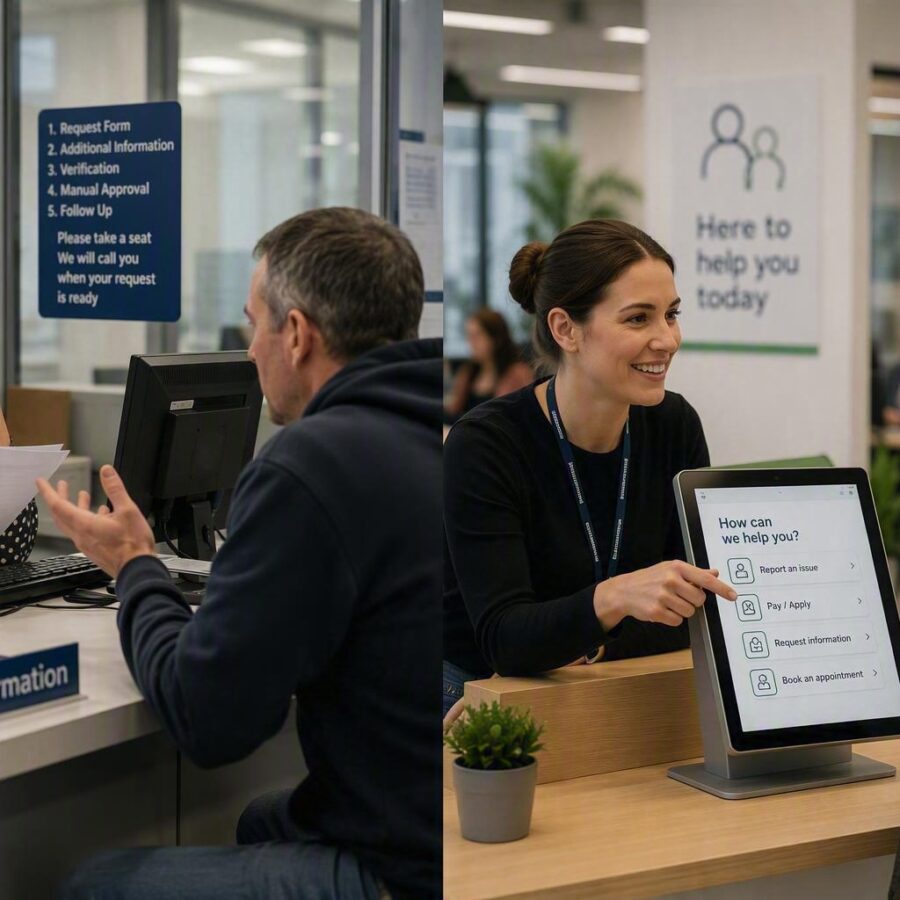
One of the biggest workforce risks during reorganisation is overwhelming employees with operational complexity. As systems change, collaboration models evolve, and information becomes more difficult to navigate, even routine tasks can become harder and more time-consuming. These challenges can quickly impact productivity, confidence, and the overall employee experience if they are not addressed proactively.

This is where modern digital platforms and AI can play a valuable role. Their purpose is not to remove people from the process, but to reduce friction within increasingly complex environments. Tools such as Microsoft Copilot can help staff locate policies more quickly, summarise operational guidance, retrieve information efficiently, and reduce the time spent searching across fragmented systems and disconnected sources of information.

While these improvements may appear small in isolation, their impact can be significant when applied across an organisation. During periods of reorganisation, reducing everyday frustrations at scale can help improve workforce confidence, increase productivity, and support a smoother transition. By making information easier to access and enabling staff to work more effectively, digital tools can help organisations maintain momentum while supporting employees through change.

Reorganisation Is Also a Collaboration Challenge

When councils merge, teams that may never previously have worked together suddenly need to collaborate closely. 

That creates: 

  • different terminology,  
  • different habits,  
  • different governance expectations,  
  • and different communication styles.  

Without clear collaboration structures, operational friction grows quickly. 

Successful councils therefore focus heavily on: 

  • standardising collaboration,  
  • simplifying communication,  
  • improving knowledge accessibility,  
  • and reducing unnecessary complexity.  

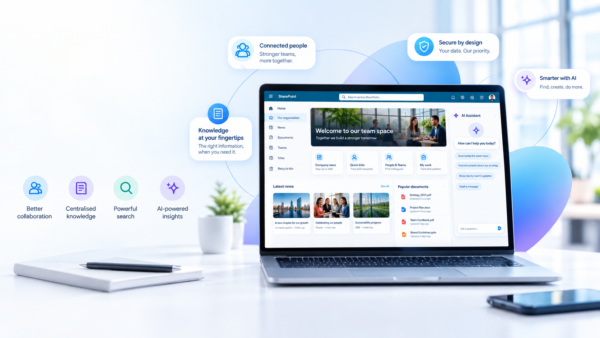
This is why Microsoft 365, Teams and SharePoint governance are becoming increasingly strategic during reorganisation. 

Because collaboration is no longer simply a technology issue. 

It is a workforce enablement issue. 

The Human Side of AI Adoption Matters Too

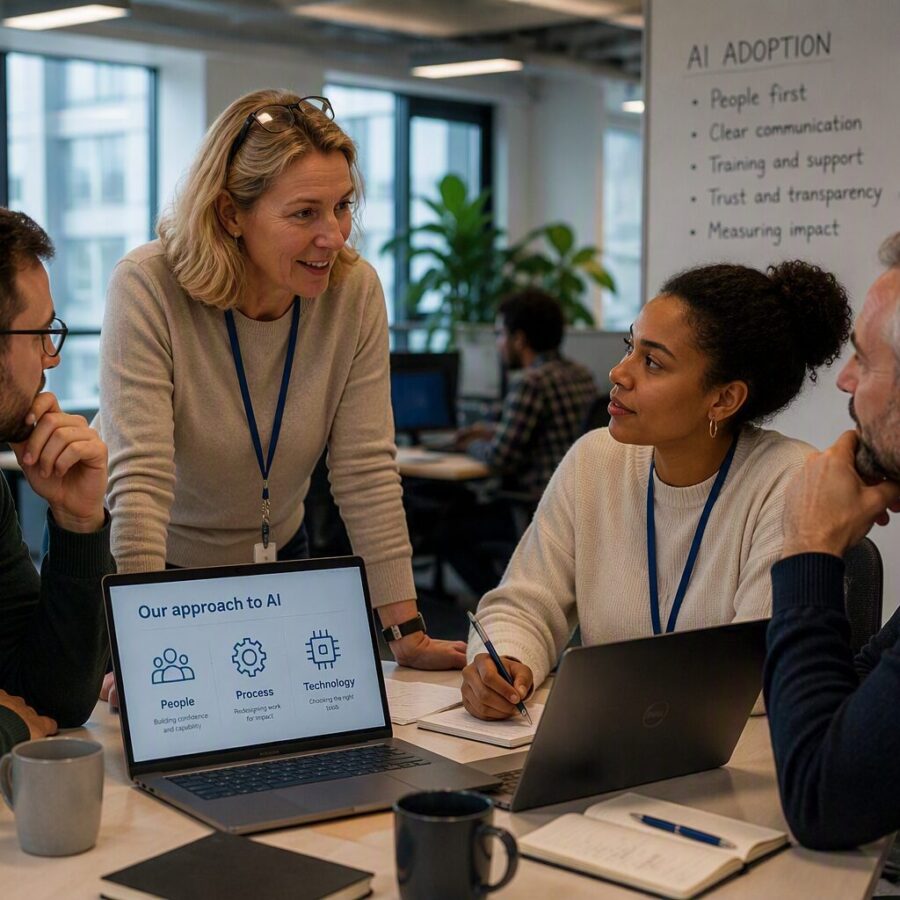
As councils begin introducing Microsoft Copilot, AI Agents, automation, and more intelligent ways of operating, the workforce conversation becomes even more important. While technology often attracts the most attention, the success of AI initiatives depends far more on people than on the tools themselves. In practice, adoption is largely driven by trust, clarity, governance, and a clear understanding of how AI will help employees in their day-to-day roles.

The councils achieving the greatest success with AI are not positioning it as replacement technology. Instead, they present it as support technology that helps employees work more effectively. Used in the right way, AI can reduce repetitive administrative tasks, help staff navigate increasing complexity, surface information more quickly, and create more time for meaningful operational work and citizen-focused outcomes.

This distinction matters enormously. When employees understand that AI is there to support rather than replace them, they are far more likely to engage with new tools, build confidence in their use, and recognise the value they can bring. As a result, successful AI adoption becomes less about technology deployment and more about creating a culture where people feel empowered, supported, and equipped to work differently in an increasingly complex environment.

The Best Reorganisation Programmes Feel Human

Perhaps the biggest difference between successful and struggling reorganisation programmes is how change feels internally. 

In struggling organisations: 

  • change feels imposed,  
  • communication feels fragmented,  
  • complexity increases,  
  • and uncertainty grows.  

In successful organisations: 

  • change feels guided,  
  • leadership feels visible,  
  • communication feels practical,  
  • and people feel supported through transition.  

That human experience shapes transformation outcomes far more than many councils realise. 

Final Thoughts

Reorganisations are often discussed in terms of governance, systems, structures, and operational models. While these elements are critical, transformation is ultimately experienced by the people affected by it every day. The success of any reorganisation depends not only on how well processes and technologies are redesigned, but also on how effectively employees are supported through the change.

The councils most likely to succeed are those that communicate clearly, reduce operational friction, build workforce confidence, and modernise collaboration thoughtfully. They understand that organisational change is not solely a technical or structural challenge. It is equally a human one. By providing clear direction, creating positive employee experiences, and helping staff adapt to new ways of working, leaders can foster greater engagement and resilience throughout the transition.

Importantly, these councils recognise that human resilience is just as important as digital resilience. New systems and organisational structures can only deliver value when the people using them feel capable, supported, and confident. Ultimately, successful reorganisation is not simply about building a new organisation. It is about creating an environment where people can thrive within it, enabling them to deliver better outcomes for residents, communities, and colleagues alike.

Ready to Take the Next Step?

Local Government Reorganisation is about more than organisational change. Success depends on being technically, securely and operationally ready from day one.

Complete the form to access the Day One Ready Framework, a practical guide designed to help councils assess readiness across governance, technology, security, data, Microsoft 365 and operational planning.

As part of your request, a CPS consultant will also arrange a complimentary Day One Ready Assessment to help you identify potential risks, gaps and priorities ahead of implementation.

Complete the form below to download the framework and start your Day One Ready Assessment.

Get instant access.

    "]