
Insights, Technology
Why AI, Copilot and Frontier Firms Will Reshape Local Government Reorganisation
Published 25/08/2026
Author: The CPS Team

Councils Are Not Just Reorganising Structures, They Are Reorganising How Work Happens
Most conversations around Local Government reorganisation still focus on structure.
Which councils merge.
Which services consolidate.
Which responsibilities shift.
But underneath all of that, something much bigger is happening.
Councils are being forced to rethink how work itself happens.
Because while organisations are merging:
- demand is rising,
- budgets remain constrained,
- operational complexity is increasing,
- and staff are already under pressure.
At the same time, expectations around responsiveness, digital experience and productivity continue to grow.
That creates a difficult reality for Local Government leaders.
Because reorganisation is no longer simply about building larger organisations.
It is about building organisations capable of operating differently.
And increasingly, AI is becoming central to that conversation.
Not as a futuristic concept.
Not as an innovation experiment.
But as a practical operational capability.
The councils that recognise this early will be significantly better positioned during reorganisation than those who treat AI as something to explore later.
Kent County Council’s journey is not just a success story, it’s a blueprint. It shows what’s possible when AI is deployed with purpose, empathy, and scale. And it proves that with the right partner, transformation is not only achievable, but also repeatable.
Reorganisation Is Exposing a Problem Many Councils Already Had
One of the biggest operational challenges in Local Government today is not necessarily technology itself.
It’s friction.
Friction caused by:
Duplicated processes

Disconnected systems
Inconsistent governance

Operational overload
Most councils already experience this
to some degree...
But reorganisation magnify it dramatically.
Because suddenly:
- more systems are introduced,
- more data needs consolidating,
- more staff need access to information,
- and more services need coordinating across larger organisations.
This creates an enormous productivity challenge.
And in many councils, staff are still spending huge amounts of time:
- searching for information,
- checking procedures,
- navigating disconnected systems,
- duplicating administrative work,
- or trying to understand which process now applies.
That’s not a technology failure.
It’s an operational design problem.
And this is exactly where AI, Copilot and Agents begin to matter.
The Most Valuable Use of AI in Local Government Is Not What Many Expect
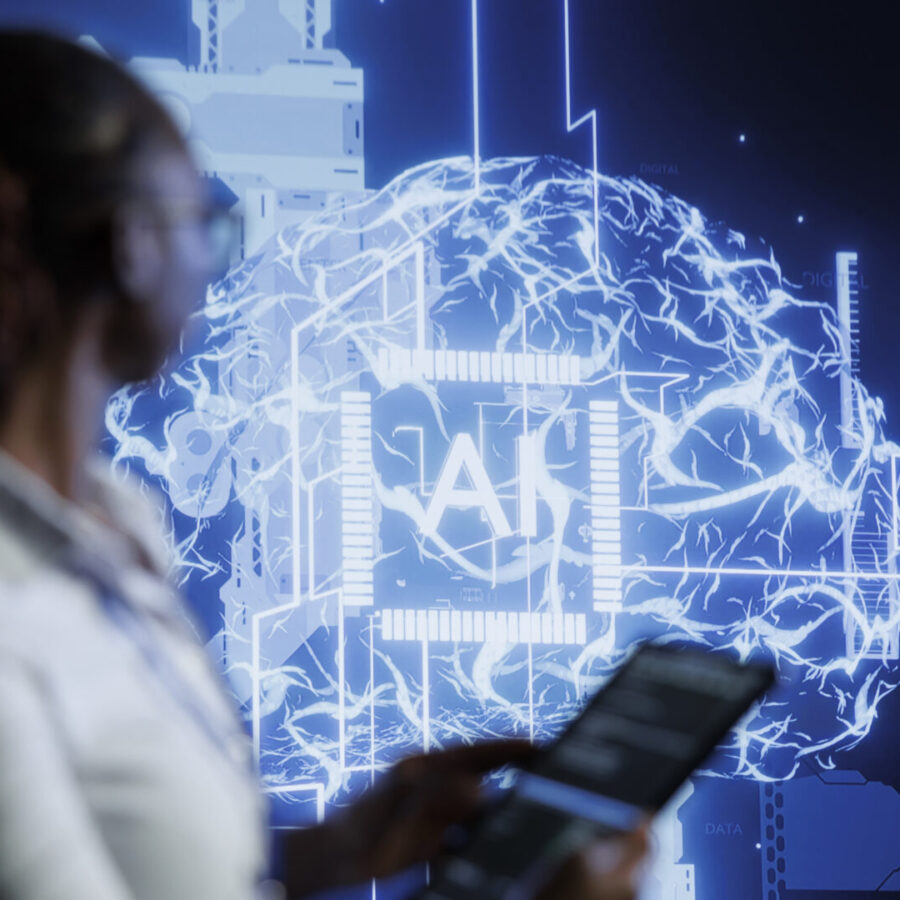
There’s often a temptation to think about AI in dramatic terms: autonomous councils, fully automated services, job replacement and futuristic citizen experiences.
But in reality, the most immediate value of AI in local government is much more practical. It’s about reducing operational friction.
AI can help people find information faster, navigate complexity, reduce manual administration and make better decisions with less effort. It may sound less exciting than the headlines, but operationally, the impact can be transformational.
This becomes particularly important during reorganisation, when staff are navigating increasingly complex environments. Different authorities bring different terminology, policies, governance structures, systems and ways of working. Without the right support, productivity can quickly suffer.
This is where tools like Microsoft Copilot can add real value, not by replacing expertise, but by helping teams find clarity, work more efficiently and focus their time where it matters most.
Why Copilot Changes the Knowledge Problem
One of the biggest hidden challenges during council consolidation is organisational knowledge.
Most operational knowledge in Local Government lives across:
- SharePoint,
- Teams,
- email,
- policy libraries,
- historic systems,
- countless documents created over many years.
The problem is not usually lack of information. It’s finding the right information quickly enough to use it effectively. During reorganisation, that challenge grows rapidly.
Staff moving into newly merged organisations often need immediate access to:
- policies,
- operational guidance,
- escalation procedures,
- governance rules,
- service-specific knowledge.
Historically, that meant:
- searching through folders,
- asking colleagues,
- navigating multiple systems,
- or relying on institutional memory.
AI changes that dynamic significantly. Copilot allows staff to interact with organisational knowledge differently.
Instead of: “Where is that document?”
People begin asking:
- “What’s the latest process for this?”
- “Summarise the housing escalation procedure.”
- “Show me the updated governance guidance.”
That shift is incredibly important.
Because it changes knowledge from something people hunt for… into something that becomes accessible naturally within the flow of work.

AI Agents Could Become One of the Most Important Operational Tools in Reorganisation
One of the most exciting developments for local government is the rise of AI Agents. And importantly, these are more than simple chatbots.
AI Agents can increasingly guide users through processes, surface relevant information, support workflows, automate repetitive tasks and provide contextual assistance to both staff and citizens.
During reorganisation, that capability becomes particularly valuable. Imagine a newly merged council where a member of staff can simply ask, “Which process now applies to this case?”, “What are the updated approval steps?” or “Which team owns this service now?”
Rather than navigating fragmented systems, documents and processes manually, AI Agents can help staff find the right information and complete tasks much faster.
The result is less operational friction, supporting productivity, onboarding, collaboration and continuity of citizen services.
And as councils become larger and more complex through reorganisation, these efficiencies will become increasingly important.
The Frontier Firm: The Future of Local Government?
Microsoft increasingly talks about the idea of the Frontier Firm.
An organisation where AI is not bolted on afterwards, but embedded into how work happens every day.
That concept matters enormously for Local Government, because councils are now reaching a point where traditional operating models are under pressure from every direction:
- rising demand,
- workforce challenges,
- budget constraints,
- regulatory complexity,
- and growing citizen expectations.
The Frontier Firm model introduces a different way of thinking.
Instead of asking: “How do we simply do more with less?”
The conversation becomes: “How do we redesign work so people spend less time fighting operational complexity?”
That’s a very different mindset. And reorganisation create a rare opportunity to build toward that future intentionally, because councils are already:
- consolidating platforms,
- redesigning governance,
- standardising collaboration,
- restructuring services,
- and modernising operations.
The foundations for AI-enabled Local Government are already being created through reorganisation itself.

But AI Readiness Depends on Governance Readiness
There is an important reality councils cannot ignore: AI maturity depends heavily on governance maturity.
AI can only operate effectively when permissions are structured, information is trustworthy, systems are connected and governance is properly controlled. If councils carry fragmented permissions, duplicated information, poor document structures or inconsistent governance into a new environment, AI will quickly amplify those underlying problems.
That’s why reorganisation planning should no longer treat migration, governance, collaboration and AI as separate priorities. They are deeply interconnected.
The councils that take the time to build a strong foundation now will be better positioned to adopt AI quickly, securely and effectively later.
In other words, good AI starts with good foundations.
The Most Successful Councils Will Think Beyond Migration
Some organisations still view reorganisation as a temporary disruption to survive.
But the most forward-thinking councils are treating it differently.
They are viewing reorganisation as:
- an opportunity to modernise,
- simplify operations,
- redesign collaboration,
- improve citizen engagement,
- and build AI-enabled organisations for the future.
Those councils are not simply asking: “How do we merge systems?”
They are asking: “How should a modern council actually operate?”
That is a far more strategic conversation. And increasingly, AI, Copilot and Agents will sit at the centre of the answer.

Final Thoughts
AI is not replacing Local Government expertise. It is helping councils manage complexity more intelligently.
During reorganisation, that matters enormously. Councils are trying to:
- maintain services,
- support staff,
- consolidate platforms,
- modernise operations,
- and improve citizen experience…
…all at the same time.
The organisations that succeed will not necessarily be the ones adopting the most AI. They will be the ones that:
- simplify effectively,
- govern properly,
- structure information intelligently,
- and embed AI into operational reality thoughtfully.
Because ultimately, the future of Local Government will not be defined simply by larger organisations.
It will be defined by smarter ones.

Ready to Take the Next Step?
Local Government Reorganisation is about more than organisational change. Success depends on being technically, securely and operationally ready from day one.
Complete the form to access the Day One Ready Framework, a practical guide designed to help councils assess readiness across governance, technology, security, data, Microsoft 365 and operational planning.
As part of your request, a CPS consultant will also arrange a complimentary Day One Ready Assessment to help you identify potential risks, gaps and priorities ahead of implementation.
Complete the form below to download the framework and start your Day One Ready Assessment.
Get instant access.
Still Curious?
Explore more insights

mhance acquires CPS and City Dynamics
CPS is becoming part of mhance, creating a stronger Microsoft partner with greater expertise, broader capability and new opportunities for customers. Built on the same trusted relationships and commitment to outcomes, this marks the beginning of an exciting new chapter for our people, customers and community.

Build Smarter Agents with the New Copilot Studio
Learn how to build smarter AI agents with the new Copilot Studio. See what’s changed, compare agent approaches, and understand how to select the right architecture for your business needs.

The AI Governance Framework Every Leadership Team Needs
Artificial Intelligence is rapidly becoming embedded within the way organisations operate. Yet while most discussions focus on productivity and innovation, a more important question is emerging. How do organisations govern AI effectively while continuing to innovate? The answer may determine which organisations successfully embrace Agent First and which struggle to move beyond experimentation.